
J. Gibson Mcilvain Co. Pages - Tropical Decking - IPE
Ipe wood and Decking
Tabebuia Serratifolia
Ipe Wood is the King of Tropical Decking
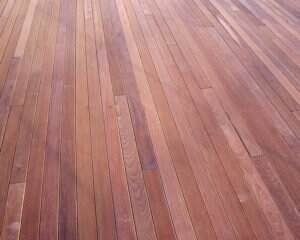
Ipe has earned a world class great reputation by being one of the only hardwood decking products that will last as long as you own your house. It has a 40 plus year lifespan, therefore this Brazilian tropical hardwood will add value and a lifetime of use and beauty to any deck, porch, siding, or interior flooring project. Furthermore, the class A fire rating of Ipe is a nice bonus feature. In short, it is one of the best exterior woods for decking, docks, siding, furniture or whatever you need to stand up to the wrath of Mother Nature.
Hard as Iron
Ipe Lumber is also known appropriately as “Ironwood” because of its remarkable hardness and density. In other words, the real story is that Ipe Wood is very stable. All wood species move but they do not move evenly. Consequently, as moisture in the air changes, wood moves. Because most species of wood do not move the same amount in all directions either, it is this difference that will cause a board to warp and twist. A board will move more across the grain (tangential) than it will in the radial plane, and for all intents and purposes, not at all along the grain.
However, with Ipe wood the ratio between the tangential and radial (T/R ratio) is almost identical, at 1.1 meaning the board does actually move the same amount in all directions… almost. In short, this is why it is a top performer in decking and other exterior situations. Regardless of this near even movement, consideration should be given to gap size between boards when installing Ipe as decking.
IPE Lumber SPECIFICATIONS
| Character* | Green | Dry | Units |
| Bending Strength (MOR) | 22458 | 25963 | psi |
| Max Crushing Strength | 10312 | 13366 | psi |
| Stiffness (MOE) | 2901 | 3129 | 1000 psi |
| Work to Maximum Load | 28 | 22 | in-lbs/in3 |
| Hardness (Janka) | – | 3684 | lbs |
| Shearing Strength | – | 2048 | psi |
| Specific Gravity | 0.92 | 1.0 | – |
| Weight | – | 62 | lbs/ft3 |
| Density | – | 65-72 | lbs/ft3 |
| Radial Shrinkage | – | 7 | % |
| Tangential Shrinkage | – | 8 | % |
| T/R Ratio | – | 1.1 | – |
| Volumetric Shrinkage | – | 13 | % |